Robots4Inclusion in Spain: Exploring Students’ Experiences, Inclusion and Learning Outcomes
Robots4Inclusion Spain: Five Spanish primary schools contributed to the Erasmus+ Robots4Inclusion evaluation, providing valuable evidence about pupils’ experiences with educational robotics, social-emotional learning and inclusive classroom activities.
As part of the Robots4Inclusion project, M&M Profuture Training supported the implementation and evaluation of classroom activities designed to bring together educational robotics, cooperation and social-emotional learning.
The Spanish evaluation involved 175 pupils from five primary schools, including 160 pupils in the intervention group and 15 in the control group.
Measuring Students’ Experiences Before and After the Intervention
The evaluation examined three key dimensions:
- Sense of Belonging: pupils’ feelings of connection to their school and classroom community.
- Sense of Inclusion: how children perceived their inclusion and participation.
- Technical Interest: pupils’ interest in technology-related learning.
The questionnaires were administered before and after the classroom intervention, allowing the project team to examine how pupils’ responses changed over time.
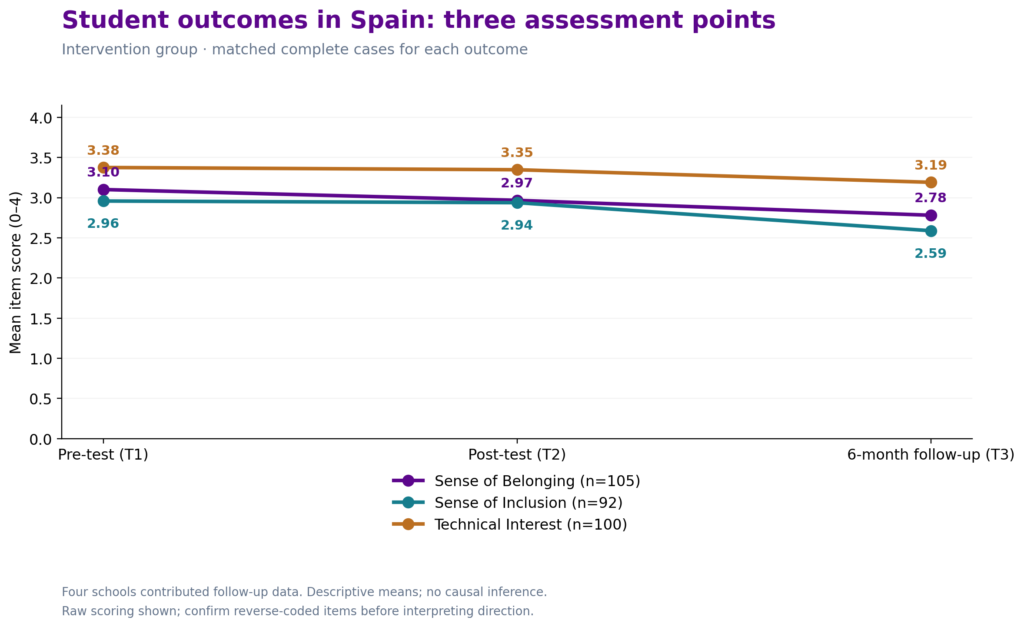
The initial descriptive results showed relatively high scores across the three dimensions. However, there was no clear overall improvement immediately after the intervention. Sense of Belonging and Sense of Inclusion showed small decreases in average scores, while Technical Interest remained broadly stable.
These findings underline the importance of assessing educational activities systematically and distinguishing between positive classroom experiences and measurable changes in learning outcomes.
What Did Students Think About the Activities?
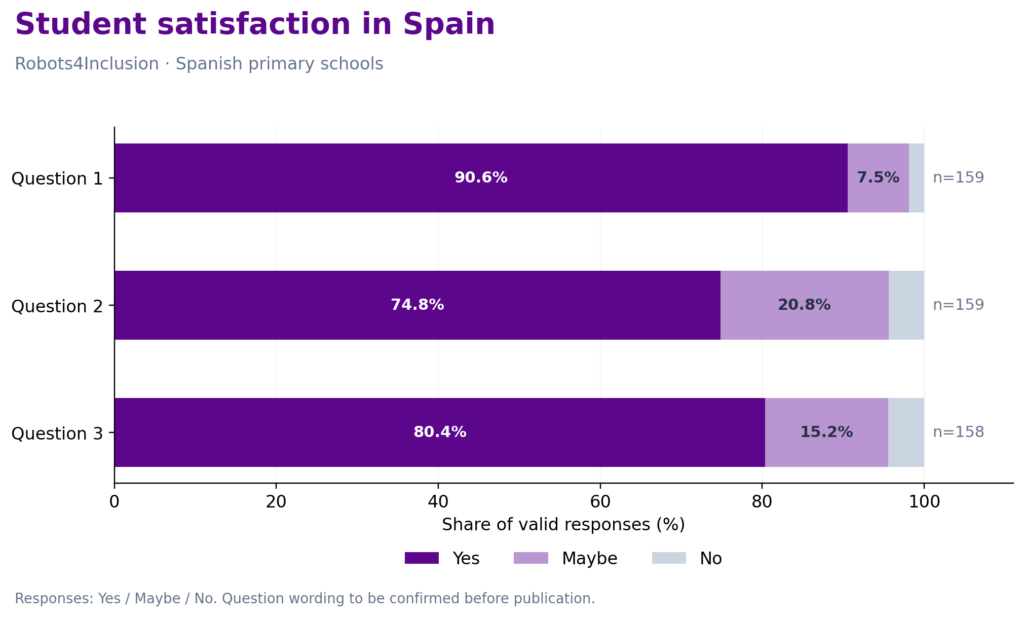
Student satisfaction was another important component of the Spanish evaluation.
The responses showed a generally positive pattern:
- 90.6% answered “Yes” to the first satisfaction question.
- 74.8% answered “Yes” to the second satisfaction question.
- 80.4% answered “Yes” to the third satisfaction question.
These findings provide encouraging feedback on pupils’ experiences during the programme.
The satisfaction results complement the other assessment measures, offering an additional perspective on how students experienced the activities.
Looking Beyond the Immediate Results: The Six-Month Follow-Up – Robots4Inclusion Spain
The Spanish evaluation also included a follow-up assessment approximately six months after the intervention.
The follow-up data provide an opportunity to examine whether pupils’ perceptions of belonging, inclusion and technology-related learning changed over a longer period.
A longitudinal analysis, comparing matched responses from the same pupils, is necessary to interpret these findings accurately.
Teachers’ Perspectives Complement the Student Evaluation
Alongside the student questionnaires, the project collected feedback from participating teachers.
Their experiences offer an important complementary perspective, helping to understand how robotics-based activities can be organised in primary classrooms and how teachers perceive their potential contribution to cooperation, participation and social-emotional learning.
Combining student questionnaires and teacher feedback provides a broader understanding of the implementation experience in Spain.
Contributing to Evidence-Based Inclusive Education
The Spanish experience highlights the value of combining innovative teaching practices with systematic evaluation.
Through the participation of schools, teachers and pupils, Robots4Inclusion has gathered evidence that can inform future educational activities integrating robotics, social-emotional learning and inclusive approaches.
The findings also reinforce the importance of long-term evaluation when exploring changes in pupils’ experiences and attitudes.
Discover the project and its educational resources: https://robots4inclusion.eu/
Robots4Inclusion is co-funded by the European Union through the Erasmus+ Programme.